





Table of Contents
- Understanding ADHD’s Emotional Landscape
- Why Emotions Run High
- Cultivating Emotional Wellness Daily
- 1. Embrace Mindfulness
- 2. Create Structure with Scheduling
- 3. Exercise for Emotional Boosts
- 4. Set Boundaries to Manage Overload
- 5. Foster Self-Compassion
- Building Emotional Intelligence: A Path to Resilience
- Seeking Support from Networks and Experts
- Setting the Stage for Tomorrow
Understanding ADHD’s Emotional Landscape
ADHD isn’t just about distraction or endless energy. A big slice of its essence lies in emotional regulation. A revealing study from the National Institute of Health underscores that those with ADHD often feel emotions more intensely, leading to heightened responses that ripple through daily life.
“For many adults with ADHD, keeping emotions in check can be the toughest part. It’s not just impulsivity or attention, but how feelings like frustration or joy are internalized.”
— Dr. Sarah Chen, Clinical Psychologist, NYU
Why Emotions Run High
Picture having a sensory amplifier wired into your brain. Everyday stimuli, like an email reminder from your boss or a small spat with a friend, suddenly feel monumental. Why? ADHD has a unique impact on the brain’s limbic system—the emotional epicenter. Research points to deficits in the prefrontal cortex, the area responsible for inhibiting emotional reactions and moderating the limbic system (as per studies reported by Mayo Clinic).
If your emotions sometimes feel overwhelming or uncontainable, it’s a common thread among those with ADHD. Rest assured, you’re not alone, and daily practices can boost your emotional equilibrium.
Cultivating Emotional Wellness Daily
Achieving emotional stability with ADHD weaves together understanding, routine, and kindness towards oneself. Here are some strategies to consider:
1. Embrace Mindfulness
For Jessica, a 32-year-old who discovered mindfulness meditation, life changed course.
“It didn’t magically erase my emotional spikes but armed me with the tools to coexist with my emotions—something I’d never managed before.”
— Jessica, Mindfulness Practitioner
Mindfulness boosts meta-awareness—a consciousness of one’s own thoughts and emotions. This can help tether you to the current moment, taming emotional turbulence.
- Dedicate just five minutes daily to mindful breathing or body scans.
2. Create Structure with Scheduling
Bringing order into the ADHD mind often comes through structure. Dr. Robert Sylvester, an ADHD expert, emphasizes routine.
“Predictability in day-to-day activities significantly aids emotional regulation. Knowing your next move gives your brain a recognizable pattern.”
— Dr. Robert Sylvester, ADHD Expert
- Utilize planners or digital scheduling tools, like Sunrise, for daily structure.
- Break down tasks into smaller bites to ward off overwhelm. Tiny, achievable goals can be affirming and motivational for an ADHD brain.
3. Exercise for Emotional Boosts
Exercise is a mood catalyst, increasing neurotransmitters like dopamine and serotonin—levels that often dip in those with ADHD. The Mayo Clinic has stated that exercise not only aids comprehension and focus but also fosters emotional well-being.
- Engage in activities you love, whether it’s a stroll in the park, a dance class, or cycling.
- Short, regular sessions are key. A mere 15 minutes can spark notable emotional uplift.
4. Set Boundaries to Manage Overload
With ADHD, sifting through the noise of stimuli can be hard, often spiraling into sensory overload. Clear boundaries, both physical and digital, are essential.
- Create a calming space at home where you can retreat when overwhelmed.
- Curb phone notifications to lessen digital interference.
5. Foster Self-Compassion
We’re often harsh on ourselves for feeling out of control. Cultivating self-compassion can be a balm for these emotional burns. Your self-talk plays a crucial role; the aim is to pivot from critical to supportive inner dialogues.
“Treat yourself as kindly as you would a friend in similar shoes.”
— Kristin Neff, Scholar, University of Texas
- Recognize negative self-talk, pause, and shift the narrative: what advice would you give a friend?
- Develop a self-compassion mantra for stressful times, like “It’s okay to feel this way. I’m doing my best.”
Building Emotional Intelligence: A Path to Resilience
Tracking emotions can also fortify one’s ability to manage ADHD. Consider maintaining an emotional diary to note triggers and patterns. Over time, this builds a roadmap to foresee challenges and plan responses.
- Document circumstances that led to strong emotional responses to identify triggers.
- Cheer on your emotional progress—those instances when you managed better than before.
Take Lisa, a full-time professional and parent, for instance. She shares,
“Journaling about my emotions doesn’t erase my ADHD, but it shines a light on patterns I’d overlooked. Now, I’m gentler with myself because I can witness my growth.”
— Lisa, Professional and Parent
Seeking Support from Networks and Experts
Lastly, navigating ADHD emotional wellness often requires external support, be it therapy, coaching, or support groups. Joining ADHD communities fosters validation, shared wisdom, and innovative strategies.
- Look into cognitive-behavioral therapy with specialists who understand ADHD.
- Engage in local or online ADHD support groups where shared experiences encourage understanding.
Setting the Stage for Tomorrow
Boosting ADHD emotional wellness daily might swing between obstacles and victories. But here’s the heart of it: your journey is significant, and each stride strengthens your well-being. By weaving routines, mindfulness, exercise, boundary-setting, and self-compassion into life’s fabric, you’re constructing a foundation for emotional steadiness.
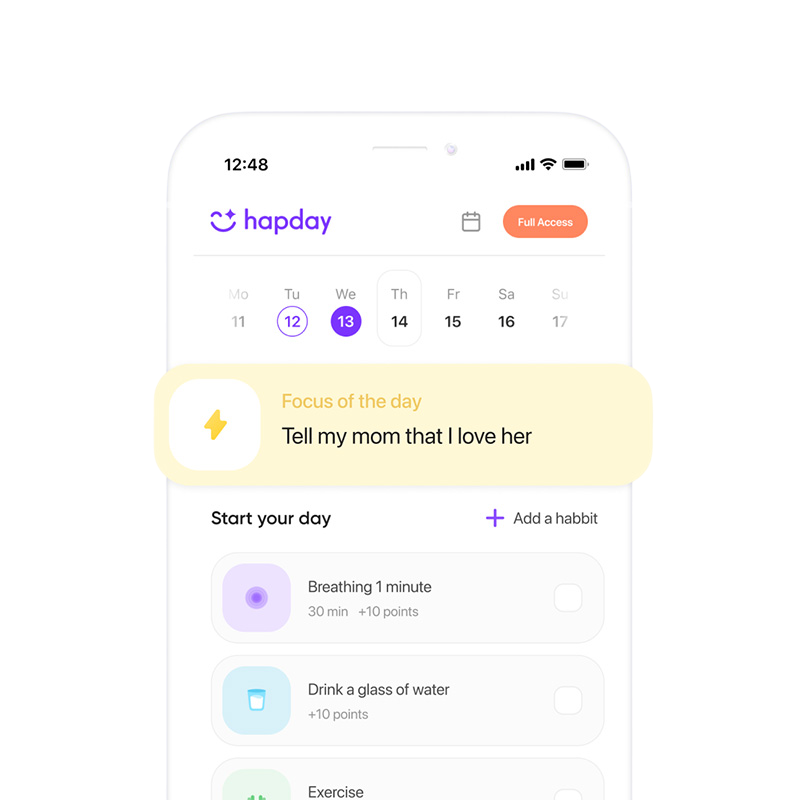
For added support, consider Sunrise, an ADHD-focused coaching app. Offering tools like habit tracking and AI-enhanced daily planning, it helps you fine-tune your focus and emotional balance. Download Sunrise from the App Store today.
Though ADHD may add bumps to life’s path, it doesn’t strip your capability to navigate it with resilience and grace. Embrace each stride with courage and tenderness, crafting a life truly meant for you.
Key Takeaways
- ADHD impacts emotional regulation, leading to intense emotional experiences.
- Mindfulness can help manage emotional spikes, promoting self-awareness.
- Creating structure and routine can significantly aid emotional stability.
- Exercise enhances mood and emotional well-being through increased neurotransmitter levels.
- Self-compassion encourages a healthier inner dialogue and emotional resilience.
The Bottom Line
By turning understanding into action and support into empowerment, you carve a path to a rich, balanced, and fulfilling emotional life.
References:
- National Institute of Health – https://nih.gov
- Mayo Clinic – https://mayoclinic.org
- University of Texas – https://utexas.edu