




Finding Your Own Rhythm with ADHD: Embracing Productivity Through Unique Traits

Table of Contents
- Understanding ADHD and the Nature of Productivity
- The Science of Habits and ADHD
- 1. Embrace Structure and Flexibility
- 2. Prioritize Physical Activity
- 3. The Role of Diet in ADHD
- 4. Declutter and Organize Your Space
- 5. Digital Tools as Allies
- 6. Rest, Recharge, and Repeat
- Building a Supportive Environment
- The Bottom Line
Key Takeaways
- ADHD management involves understanding the unique traits of the ADHD mind.
- Habits play a crucial role in reducing cognitive load and boosting productivity.
- Balancing structure with flexibility enhances focus and adaptability.
- Physical activity, diet, and organized spaces significantly impact cognitive function.
- Community support and open communication can help in managing ADHD challenges.
In this fast-paced world, finding your own rhythm can sometimes feel like chasing shadows—especially if your mind has a tempo all its own. For those of us navigating life with ADHD, the quest for productivity can often seem like a mental tug-of-war, with distractions and racing thoughts pulling us in different directions. But perhaps the key isn’t in resisting our nature but in finding harmony within it.
Picture this: It’s a lazy Saturday morning. I’m outside on a picnic blanket, surrounded by half-filled journals and a no-holds-barred to-do list. My thoughts are as scattered as the sunlight across the lawn, brimming with potential yet peppered with frustration as the hours tick by. If this scene resonates, you’re definitely not in isolation. ADHD brings its complexities to the table—and sometimes, its gifts, too. The challenge is in shaping daily habits that harness these unique traits for more than just survival.
Understanding ADHD and the Nature of Productivity
ADHD, formally known as Attention-Deficit/Hyperactivity Disorder, involves more than just a few moments of distraction—it’s about patterns of impulsivity, hyperactivity, and real inattentiveness. Back in 2021, the CDC noted that about 8.4% of children and roughly 2.5% of adults live with ADHD. Yet, in conversations about productivity, these statistics often outshine the strengths intrinsic to the ADHD mind.
“ADHD is a neurodevelopmental disorder; the brain’s attention network matures at a slower pace.”
— Dr. Sarah Chen, Clinical Psychologist
This understanding might be the fresh breath many need, shifting the narrative from one of self-criticism to one of strategic awareness and planning. Is it liberating? Perhaps it is, if it means welcoming the nuances of our brains.
The Science of Habits and ADHD
Before delving into specifics, let’s acknowledge why habits are pivotal for ADHD management. As James Clear, in his work “Atomic Habits,” eloquently suggests, habits build our lives by serving as repetitive loops that gradually become automatic. Nowhere is this more beneficial than for those grappling with ADHD, where decision fatigue and executive function difficulties are a daily occurrence.
Wondering why habits are important? For ADHD, habitual actions decrease the cognitive load involved in planning, allowing the brain to pivot more effectively toward creativity and execution.
1. Embrace Structure and Flexibility
Managing ADHD optimally requires a delicate balance between structure and flexibility. Jennifer Katzman, an occupational therapist at ADHD Lifelong, asserts that a solid framework organizes mental resources effectively. Yet a touch of adaptability ensures that one isn’t held hostage by rigid routines.
Consider this: Instead of chaining yourself to a fixed schedule, why not test out time blocks? Maya, 28, struggled with remote work focus until trying the Pomodoro technique—25 minutes of absorbed work followed by a brief pause. Her productivity took off as these blocks prevented overwhelm.
2. Prioritize Physical Activity
The connection between physical activity and mental performance, especially in people with ADHD, is well-established. Harvard Health Publishing has revealed that exercise heightens dopamine levels, a key player in attention regulation.
Engage both mind and body. Try jumping jacks or a spontaneous dance break to unleash any pent-up energy. Aside from channeling hyperactivity into something positive, it also lifts mood and sharpens focus.
3. The Role of Diet in ADHD
Our diet significantly impacts cognitive function. Dr. Mark Stein, a leading ADHD expert, underscores the role of nutrient-rich foods in dampening ADHD symptoms. A balanced diet is instrumental in boosting focus and sustaining energy.
When it comes to eating, clarity is key. Aim for meals filled with protein, omega-3s, complex carbs, and fiber. By setting realistic meal-prep days, you stymie indecision during hectic weeks.
4. Declutter and Organize Your Space
Visual clutter often translates to mental clutter. A study from the Journal of Neuroscience highlighted how various visual stimuli vie for your attention, draining productivity.
To counter this, aim to clear one cluttered space at a time. Storage solutions and color-coding might seem trivial, but they clarify the mind, too.
5. Digital Tools as Allies
Why not let tech be your friend? Applications crafted with ADHD priorities in mind can be game-changers.
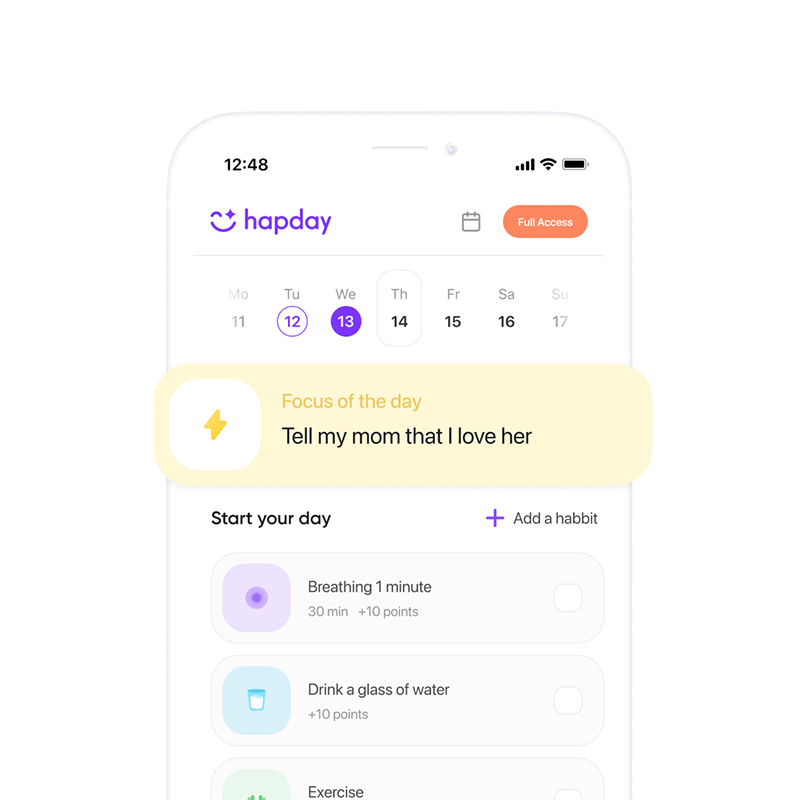
Digital planners and reminders? They’re not just fancy gadgets; they help keep your priorities crystal clear. Apps like “Sunrise – ADHD Coach” offer habit tracking tools tailored to the ADHD mind, according to Sophia, a professional who finds its custom notifications invaluable.
6. Rest, Recharge, and Repeat
Never underestimate a good rest—it’s vital for maintaining productivity over time. The National Sleep Foundation emphasizes how regular sleep patterns enhance attention and behavior.
Focus on mastering the sleep game. Develop a preludes-to-sleep ritual, be it a soothing Spotify playlist or a cherished book. With blue-light blocking glasses, screens can become allies, not enemies.
Building a Supportive Environment
While cultivating these habits, remember—support exists. Communication with those close to you about your needs can be invaluable. Community, whether online or face-to-face, offers shared experiences and strategic insights for common hurdles.
By nurturing daily routines, you aren’t reshaping your nature—instead, you’re enhancing the impressive potential of the ADHD mind. It’s less of a challenge, more of a journey—an intricate dance between productivity and self-discovery.
Because, in the end, productivity goes beyond task completion; it’s about doing what resonates with your own identity. By aligning habits with ADHD, you’re not just boosting productivity; you’re creating a life rhythm that celebrates the uniqueness within you.
The Bottom Line
This journey is ever-evolving. Celebrate the wins, learn from the steps missed. Narrative building? It’s never static, but rather an ongoing testament to living authentically with ADHD.