





You open the fridge for lunch and freeze. Salad? Leftover pasta? Order tacos? Ten minutes later you’re still in the cold glow, scrolling, hungry, oddly defeated. Zoom out and it’s the same pattern with email replies, choosing which task to start, deciding whether to shower before or after you answer Slack. If you live with ADHD, this isn’t laziness; it’s the predictable jam-up of a fast, creative brain faced with too many forks in the road at once. This field guide is about untangling decision paralysis with ADHD time management that respects how your brain actually works—without asking you to become someone else.
Key Takeaways
- Decision paralysis in ADHD stems from working memory load, time blindness, and decision fatigue—not laziness.
- Design your day: pre-decide routines, externalize choices, and limit options to reduce cognitive load.
- Use time anchors and visible timers to make time tangible and safer to engage with.
- Mini “algorithms” (repeatable rules) beat motivation on low-energy days.
- When stuck, constrain the choice, pick a tiny starter, and move for 10 minutes.
Why ADHD brains freeze on choices (and why it’s not your fault)
Let’s name what’s happening. ADHD isn’t only about attention; it touches executive functions—working memory, planning, flexible thinking, self-regulation. The National Institute of Mental Health notes that ADHD often continues into adulthood and routinely shows up as trouble organizing, following through, and managing time. Those same systems drive decision-making; when they’re taxed, choices stall.
“For many adults with ADHD, decision paralysis isn’t indecision—it’s a traffic jam in the brain’s ‘air traffic control’ system. Every option shows up at the same altitude and urgency, and working memory gets overwhelmed.”
— Dr. Sarah Chen, licensed clinical psychologist
The freeze has a logic:
- Working memory bottleneck. You can juggle only so many pieces of information at once. Add steps, consequences, and feelings, and the buffer maxes out. The American Psychological Association frames executive function as the set of processes enabling planning, decision-making, and goal-directed behavior—precisely what overloads when choices multiply.
- Time blindness. Estimating duration is tougher with ADHD, so choices feel risky. Is “send that email” two minutes or two hours? Your brain hesitates, understandably. Mayo Clinic includes time management challenges among common adult ADHD symptoms.
- Decision fatigue. After a day of micro-choices (what to wear, which message to answer, which ping gets attention), mental resources dip. Avoidance follows: scrolling, snacking, postponing—again.
If this sounds familiar, you’re not broken. You’re operating with a brain that’s sensitive to choice complexity and timing uncertainty. The solution isn’t more willpower; it’s better design. Back in 2021, The Guardian reported on the strain of “always on” work decisions—ADHD or not, the environment stacks the deck. With ADHD, the stakes feel higher.
What it feels like in real life
When Maya, 28, went through her divorce, every task became a forked path: cancel the gym membership or the joint phone plan first? She’d start one form, remember three others, then abandon all of them. Her therapist explained that ADHD amplifies “open loops”—unclosed tasks that all ping the brain equally. Once Maya limited her active choices and “pre-decided” routine items (a default dinner; a nightly “close the loops” checklist), the floor steadied. I’ve seen this again and again in reporting: once the environment makes fewer demands, the person’s capacity reappears. It’s not magic. It’s mechanics.
Decision help that respects your brain: ADHD time management that actually clicks
The moves below follow a simple arc: reduce choice load, externalize information, shrink uncertainty, and build routines that decide for you. Less theory, more relief.
Redesign your choice architecture (decide-once systems)
Why it works: Each “decide once” removes a recurring micro-decision from working memory. It’s environmental design—change the setup so your brain isn’t forced to renegotiate all day.
How to do it:
- Create a tiny rotation. Choose 3 breakfasts, 3 lunches, 3 “I’m tired” dinners. Post them on the fridge. On weekdays, the list decides unless you’re celebrating.
- Capsule the routine. A capsule wardrobe for workdays or a “meeting-ready” outfit set. Fewer early choices; less morning friction.
- Decide tools by default. One notes app for everything. One calendar for all events. One project list. Decision paralysis thrives on “which tool?” debates.
- Make a “Weekday Rules” card. Example: “Mon/Wed/Fri: strength after work. Tue/Thu: 20-minute walk at lunch. If I miss it, I do 10 push-ups at 6 pm.” The rule handles exceptions in advance.
“Pre-deciding is assistive tech for the brain. It removes the part of the day where you’re negotiating with yourself. ADHD thrives with structure that’s kind, visible, and consistent.”
— Dr. Javier Morales, board-certified psychiatrist
Externalize options so your brain can choose
Why it works: Choices weigh more when they float in your head. Put them where you can see them and you offload working memory—fog turns into a field you can scan.
How to do it:
- Try a Now/Next/Later board. Brain-dump on sticky notes for five minutes. Sort into three columns: Now (must happen today), Next (this week), Later (parked). Now = 1–3 items, no more.
- Make decisions visible. If you keep toggling on a decision (apply for that role?), write the decision as a yes/no question on a card and list three criteria. Limit evidence gathering to those three.
- Use a “3×3” page. Divide a sheet into nine squares: Top 3 for today, Next 3 for the week, Parking 3 for ideas. Anything that doesn’t fit waits for the next cycle.
Shrink the decision until it fits the moment
Why it works: Big, fuzzy choices overload working memory and trigger anxiety. Define the very next visible step and you lower the threat level—dopamine follows when you complete it.
How to do it:
- The 10-minute test. Set a visible timer, work for 10 minutes, then reassess. Make starting the only decision.
- If–then prompts. “If it’s 9:30 am, then I open my calendar and pick my Top 3.” “If I finish a meeting, then I stand and drink water.” Cue-based habits reduce decision load by installing reliable triggers; NIH has highlighted this for years.
- Name the starter, not the project. Not “write report.” Instead: “open doc and write a messy title,” or “paste three bullets from notes.”
Build mini algorithms for recurring choices
Why it works: Algorithms—repeatable rules—turn slippery, values-based decisions into predictable sequences. For ADHD, predictability is rocket fuel for momentum.
How to do it:
- Morning triage ritual (3 x 3). Choose one Must (moves the needle), one Should (supports the Must), one Could (quick win). Schedule the Must first, ideally before noon.
- 80% good is done. Adopt a rule: “done at 80% beats perfect at never.” If a task hits 30 minutes past your estimate, wrap with a checklist: “spellcheck, headline, send.”
- Two-track days. Track A: deep work window (one or two 45–90 minute blocks). Track B: admin window (30–60 minutes of emails, messages, small tasks). Decisions live inside their windows.
“Algorithms are kinder then pep talks. Willpower fluctuates. Your 3-step rule is there every time, like a handrail on the stairs.”
— Arielle Brooks, PCC, ADHD coach
Time-anchoring that tames time blindness for ADHD time management
Why it works: ADHD brains often struggle to feel time passing. Anchors and visible timers make time tangible, which reduces the fear that a choice will sprawl or swallow your day.
How to do it:
- Box the task. Put it on your calendar with a start and stop, plus a one-line outcome: “12:30–1:00 pm: Draft three bullet points for proposal.” Add a 5-minute buffer for transitions.
- Use loud, visible timers. Analog desk timers or big-screen timers create urgency without panic. Pair a stretch or breath when it dings so your body learns the rhythm.
- Bookend your day. Morning: 10-minute “plan + pick Top 3.” Afternoon: 10-minute “close loops” (send any 2-minute replies, stage tomorrow’s Must, clear desk). Mayo Clinic notes that predictable routines are core to managing ADHD-related time issues.
Make fewer, better decisions by setting limits first
Why it works: Cap the number of options and your brain shifts from “hunt for the best” to “choose from what fits.” Limits beat perfectionism every time.
How to do it:
- The 3-option rule. For any decision, list three options only. Then pick using a simple tie-breaker: easiest, fastest, or most aligned with your Must.
- The 2-decisions-ahead trick. Ask, “What will Future Me need because of this choice?” If one option creates two new decisions, pick the path with fewer follow-ups.
- Use deadlines as boundaries, not pressure. Decide “by 3 pm I pick one,” not “by 3 pm I find the perfect one.” Add a short review window to adjust.
Case study: Jordan, 34, kept delaying a job application, agonizing over which writing sample to include. He applied the 3-option rule: Samples A, B, or C; choose by “most recent,” and timebox the polish to 25 minutes. Decision made, application sent—no spiral. In my notebook from that week, I wrote one line: “Constraint creates courage.”
Calm your nervous system so choices feel safer
Why it works: Under stress, your brain narrows to threat detection. Calm physiology widens attention and makes it easier to choose—and to start.
How to do it:
- Name-then-breathe. Say out loud: “I’m feeling pressure to pick the right path.” Then a slow inhale to 4, long exhale to 6, repeat 3 times.
- 5-4-3-2-1 reset. Name five things you see, four you feel, three you hear, two you smell, one you taste. When the mind spins, the senses steady.
- Move to unstick. Twenty jumping jacks, a brisk walk, or a set of wall push-ups. Then sit and pick one tiny starter. It’s unglamorous—and effective.
Make it social and external
Why it works: Social presence and accountability boost dopamine and reduce isolation. ADHD often thrives when you feel seen and supported.
How to do it:
- Body double. Work on Zoom with a friend in silence, share goals in chat, check in at the end.
- Ask for prompts. Tell a partner, “Ask me: What’s your Must? What’s your next step?” Keep it kind and brief.
- Decision DM. If you’re stuck, record a 60-second voice memo to a friend. Don’t ask for advice—just say it out loud. Most days, you’ll hear your own answer.
Run your day like a series of small doors
Why it works: The brain likes transitions with clear edges. A day of mushy tasks feels like a maze; a day with doors—start here, stop here—feels navigable.
How to do it:
- Map “door times.” Build three doors into your day: Start Work, Deep Work, Close Loops. Treat them like standing appointments.
- Create door rituals. Before Deep Work: silence phone, open one tab, start the timer. After: stand, water, check your Now list. Rituals reduce renegotiation.
- Reward early and often. A favorite song after each door, a short walk at lunch, a warm beverage after your Must—micro-rewards teach your brain to associate decisions with something good, not risk.
ADHD time management tools that help when you’re stuck
- Visible timers and analog clocks. Make time real.
- A single capture tool. One notes app or notebook with a daily “inbox” you clear during Close Loops.
- A task manager that supports Now/Next/Later or timeboxing. Keep it boring; the best system is the one you actually use.
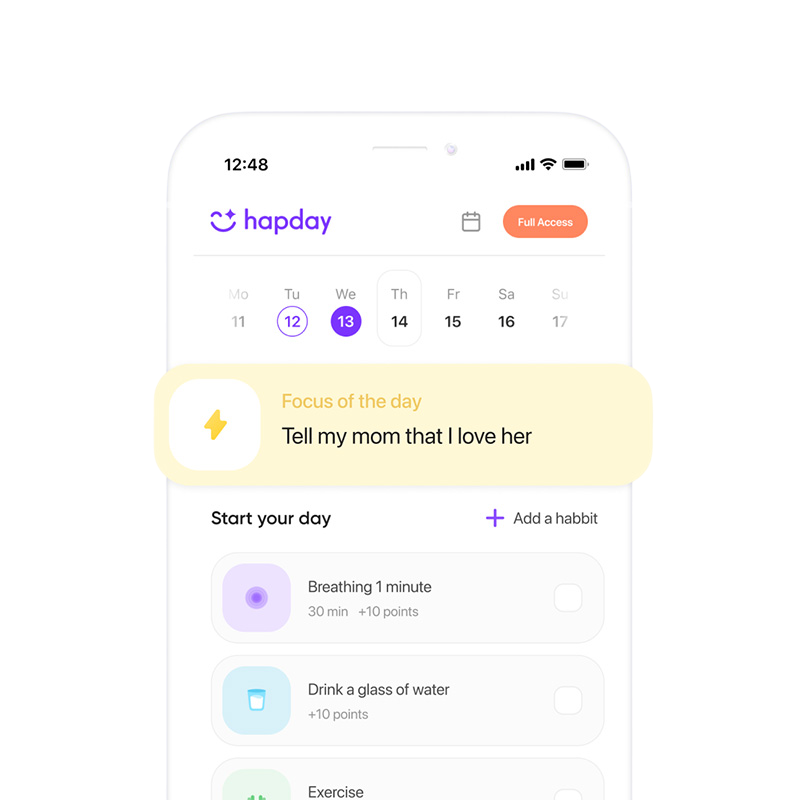
- Habit and focus apps designed for ADHD time management, with soft nudges, body-doubling rooms, and daily Top 3 prompts. Harvard clinicians have long emphasized that habit cues plus feedback loops are more durable then motivation alone.
What to do in the exact moment you freeze
- Say the stuck-phrase. “I’m stuck choosing.” Naming it creates space.
- Pick a constraint. “Three options only.” Or “Ten minutes, then decide.”
- Choose the starter. “Open the doc.” “Set timer.” “Write subject line.”
- If you still can’t choose, flip a coin—and commit to starting for five minutes. You can change course after you’re moving.
Why this works over time
You’re not just managing tasks; you’re redesigning your personal choice architecture. CDC estimates show that ADHD is common among children and often continues into adulthood, which means you deserve systems you can live with for years—not hacks that fizzle after a week. When you install decide-once rules, externalize choices, and create time anchors, you lighten the cognitive load that fuels decision paralysis. The aim isn’t perfect planning; it’s a kinder rhythm that keeps you moving. I’ve watched clients and readers rebuild momentum this way; slow at first, then unmistakable.
If this is you, you’re not behind—you’re building a brain-friendly way forward. The courage isn’t in picking the perfect option; it’s in picking one small door and walking through it. That’s the heart of ADHD time management: less friction, more flow, and a daily practice of deciding once, then doing what matters.
About those days that still spiral
They’ll happen. When they do:
- Do one repair move. Clear your desk, drink water, reset your timer.
- Choose a mercy win. Reply to one message or fold five things. It flips the day’s story.
- Revisit your decide-once rules. Are they too complex? Simplify until they feel obvious.
You don’t need a brand-new personality to make good choices. You need a few well-placed rails that carry you past decision paralysis and into action, over and over. That’s how ADHD time management becomes a path you trust.
Summary and next step
Decision paralysis with ADHD isn’t a character flaw—it’s a working memory and time-perception challenge you can design around. Pre-decide routine choices, externalize options, shrink decisions, and anchor time with visible cues. Build tiny algorithms and humane rituals. Start with one door today—a 10-minute timer and a single Must.
Want guided structure that fits your brain? Try Sunrise – ADHD Coach for habit tracking, focus tools, and AI-powered daily planning designed for ADHD minds: https://apps.apple.com/app/adhd-coach-planner-sunrise/id1542353302
The Bottom Line
Your brain isn’t the problem—your environment and decision load are. Install decide-once rules, make choices visible, and anchor time with clear starts and stops. With small, repeatable steps, you’ll trade paralysis for forward motion and build a daily rhythm you can trust.
References
- National Institute of Mental Health (NIMH): ADHD
- Centers for Disease Control and Prevention (CDC): Data & Statistics on ADHD
- Mayo Clinic: Adult attention-deficit/hyperactivity disorder (ADHD)
- American Psychological Association (APA): ADHD
- NIH News in Health: Healthy Habits