




You open your laptop to “quickly” answer an email. Two minutes in, Slack pings. Your phone lights up with a group chat meme. A browser tab begs you to check shipping status. Before you know it, you’re juggling five windows, 14 tabs, and a creeping sense of shame that you “should” be able to keep up. If this sounds familiar, digital multitasking isn’t just stealing your time—it’s taxing your ADHD brain in ways that feel personal. The good news: there are ADHD focus strategies that make digital multitasking optional, not inevitable.
Image alt: Woman using a single-tab screen timer to beat digital multitasking at her desk
Table of Contents
Key Takeaways
- Digital multitasking is really rapid task-switching—and it’s especially costly for ADHD brains.
- Design your environment to make single-tasking the default: full-screen work, blockers, and scheduled message windows.
- Short visual-timer sprints plus small rewards build trust and momentum without relying on willpower.
- Redirect novelty with a “Dopamine Menu,” protect sleep, and use simple if-then plans to handle triggers.
- Treat slips as signals, not failures—returning to the task is the skill you’re training.
Why digital multitasking hits ADHD brains harder than we admit
You’ve likely heard that humans are terrible at multitasking. What’s really happening is rapid task-switching—your brain toggling between different goals and rules. In interviews for this piece, clinicians kept returning to the same point: the “switching tax” is real. The American Psychological Association estimates that context switching can cost as much as 40% of your productive time because the brain has to reconfigure with every change. For an ADHD brain, that reconfiguration is pricier. And yes, this is the part too many of us downplay.
The National Institute of Mental Health describes ADHD as differences in attention regulation, impulsivity, and working memory—systems central to resisting on‑screen distractions. That’s why a quiet Slack ping can feel as urgent as a fire alarm. If it feels like a gravity well, it probably is. You’re not weak; you’re operating inside tools built to compete for attention, not protect it.
“ADHD isn’t a ‘lack of attention’ problem—it’s an issue with regulating attention. Digital platforms are designed to hijack attention, so people with ADHD end up fighting a rigged game. The goal isn’t more willpower; it’s redesigning the game.”
— Dr. Alicia Gomez, Licensed Clinical Psychologist and ADHD Specialist
Case study: When Maya, 28, a designer who’d long suspected ADHD, hit burnout in late 2023, she didn’t fix her willpower—she fixed her workflow. One-screen rule. Two daily message check‑ins. A 25‑minute visual timer in plain sight. After two weeks she shaved roughly an hour off her daily switching “tax,” and opening her laptop no longer felt like wading into crossfire.
The science of why these ADHD focus strategies work
- Task-switching penalties are real. Your prefrontal cortex needs a beat to “load” a task. Each jump leaves attentional residue, the cognitive afterglow that blurs your next move. The APA’s review is blunt: even small toggles add up to large losses. If you’ve felt foggy after “just a sec” on email, that’s not in your head.
- Dopamine and novelty. ADHD brains often chase novelty; new notifications deliver micro-rewards. Put novelty inside your focus system—novelty after a block, not inside the block—and you’ll feel the difference.
- Sleep and overstimulation. Sleep loss amplifies inattention and impulsivity. Blue light late at night delays melatonin and pushes sleep later, compounding distractibility the next day.
- Movement breaks improve attention. Even short, consistent bouts can boost mood and executive function. For ADHD minds, movement punctuates the workday with resets that are hard to manufacture at a desk.
Design your environment so focus becomes the easy path
Why it works: ADHD thrives with external structure. Reduce choice and friction around distractions, and you reduce the need for mid‑task self‑control. You’re engineering a runway for attention—and I’d argue environment is half the treatment.
- One-screen work: Use full‑screen mode for your active task. If you need references, use a second device strictly for reading, not messaging. The physical separation cuts reflexive switching.
- Single-tab guarantee: When you catch multiple tabs creeping in, hit reset: one task, one tab. Park everything else in a “Later” list. Pin your “Later” capture app to the dock so dropping ideas takes seconds, not willpower.
- Notification triage: Turn off badges and preview banners for everything except calls or calendar. Use a “VIP only” rule for texts so family or a manager can reach you without the rest of the noise.
- App blockers that respect ADHD: Block your top five pull‑you‑in sites during focus blocks. Choose a blocker that auto‑starts on a schedule—less deciding, more doing.
- Friction for dopamine traps: Log out of social apps on desktop. Move them into a hidden folder on your phone and remove them from the dock. You’re not banning joy—you’re making joy intentional, not automatic.
“If you have ADHD, your environment is your treatment plan. Every click you remove from a distraction and every click you remove from starting work is medicine.”
— Dr. Naomi Patel, Board-Certified Psychiatrist and ADHD Clinician
Turn messages into sprints, not a 24/7 open door
Why it works: Batching communications limits switches, shrinks attentional residue, and gives your brain a clear “messaging” mode to load—then unload. In my experience, this single change saves more brainpower than any productivity hack.
- Message windows: Pick two or three 20–30 minute windows daily for email, Slack, and DMs. Put them on your calendar. Outside these windows, keep inboxes closed.
- Set expectations: Add a status line: “Deep work until 12; I’ll reply after.” Most colleagues respect clarity. It also quiets the fear that you’re being “rude.”
- Two-minute rule with a cap: If a message takes under two minutes, do it inside the window—otherwise, schedule it or add it to a sprint list. No rabbit holes while you’re in the message block.
Rebuild focus with a rhythm your brain can trust
Why it works: ADHD prefers intensity followed by relief. Short, predictable sprints with visible endpoints reduce the urge to escape mid‑task and meet the need for novelty when it’s safe. Rhythm beats motivation on any Tuesday.
- Visual timers over vague intentions: Use a 20–30 minute visible countdown. Place it where you can see time passing—on‑screen or a physical Time Timer.
- The 2‑minute runway: Before starting, write a micro‑start: “Open doc, type title, write three bullets.” Make beginning automatic, not heroic.
- Body‑doubling: Work alongside a friend on Zoom or join a virtual focus room. Social presence boosts accountability and dampens the urge to scroll.
- Reward the rep, not the result: After a focus block, reward yourself with a stretch, a sip, or a single song. Keep it small so returning to the next block feels easy.
Jordan, 33, a software engineer with ADHD, started using 25‑minute sprints in a coworking “body‑doubling” room twice a day. “I used to promise I’d code for two hours, then I’d end up reorganizing my files,” he told me. “Now I race the clock—then I actually take a break. My brain trusts the plan.” Trust is the scarce resource; protect its.
Create a “Dopamine Menu” so novelty works for you
Why it works: If your only available novelty sits on your phone, your brain will choose it. A short menu of satisfying alternatives gives you a fast, healthier jolt between blocks without opening a spiral. Think of it as training wheels for reward.
- Make a 10‑item menu: 60 seconds of jumping jacks, step outside for fresh air, 90‑second foam roll, doodle a comic square, make a tea, pet your dog, quick text to a friend, play one song standing up, 4‑7‑8 breathing, a puzzle square.
- Keep it visible: Post the list at your desk. Choose before a focus block which reward you’ll take, so you don’t slide into news or social media by default.
Tackle digital multitasking with tabs that talk back
Why it works: Externalizing working memory protects ADHD brains from losing the thread. When you trust your system to remember, your mind stops scanning for “what else?” If you can see it, you can do it.
- Task cards, not task blobs: Break projects into visible cards with a specific, bite‑sized action. Set a “Now” column with one card only.
- Parking lot for ideas: When a good idea pops up mid‑task, dump it into an “Idea Parking Lot” without evaluating. Keep your lane clean; future‑you will sort it.
- End‑of‑day breadcrumb: Before you stop, write the next concrete step at the top of your doc. Tomorrow’s re‑entry gets 10x easier.
Sleep like it matters to your attention (because it does)
Why it works: Sleep loss sharpens distractibility and dulls working memory. Blue light near bedtime delays melatonin, pushing sleep later and making next‑day focus wobbly. If you improve only one lifestyle factor, let it be this.
- Digital sunset: Set screens to shift to warmer light after sunset. Stop scrolling 60 minutes before bed when you can. No perfection needed—just trend better.
- Wind‑down ritual: Same three calming steps nightly (shower, light stretch, book). Habit beats motivation.
- Phone exile: Charge your phone outside the bedroom or across the room. Buy a $10 alarm clock if you need to.
Mindfulness you can actually do in 90 seconds
Why it works: Brief mindfulness lowers stress arousal, which reduces impulsive tab‑hopping. It’s not about emptying your mind; it’s about a gentle return to one thing.
- 4‑7‑8 breath: Inhale 4, hold 7, exhale 8, repeat 4 times before a focus block.
- One‑minute sensory check: Name 5 things you see, 4 you feel, 3 you hear, 2 you smell, 1 you taste. Your brain lands in your body—and in the task.
Make your phone earn your attention
Why it works: Phones are attention vending machines. Introducing “payment” (friction) creates a pause for choice instead of reflex. In practice, that pause is everything.
- Home‑screen detox: Keep only tools on page one (calendar, maps, camera, focus timer). Move entertainment into a folder on page two and rename it “Are you sure?”
- Focus mode presets: Create modes like “Deep Work,” “Errands,” and “Evening Wind Down” with custom allowed apps and contacts.
- App tokens: Give yourself a small number of daily “tokens” for high‑pull apps. When they’re gone, they’re gone. You’re building trust with yourself, not punishment.
Protect your mornings, liberate your afternoons
Why it works: ADHD energy often fluctuates. Mornings can be clearer; afternoons may dip. Aligning work types with energy curves reduces unnecessary switching.
- AM for creation: Put your biggest cognitive task first, before opening messages.
- Midday movement: A 10‑minute walk or bodyweight set beats a third coffee for attention.
- PM for collaboration: Batch meetings and messaging later when your brain naturally seeks stimulation.
Email and Slack etiquette that helps you stay single-tasked
Why it works: Vague asks and unbounded threads create infinite loops. Clear formats reduce back‑and‑forth and prevent micro‑switches.
- Subject lines with verbs: “Approve Q3 budget by Fri?” beats “Budget.” You’ll reply faster and switch less.
- Slack threads, not channels: Keep context in‑thread. Mute channels you don’t own.
- Office hours: Post when you respond and why (focus windows). You model it; others copy it.
“Structure is not the enemy of creativity; it’s what lets your creative brain finally stop firefighting.”
— Dr. Samir Shah, Clinical Neuropsychologist
Use implementation intentions to defuse your hottest triggers
Why it works: “If‑then” plans automate good choices in vulnerable moments. ADHD brains respond well to clear contingencies because decisions are pre‑made.
- If Slack pings during a focus block, then I write “S” on my notepad and keep typing. I’ll check Slack at 12:30.
- If I’m about to Google something off‑topic, then I add it to my “Later” list and return to the sentence I was writing.
- If I hit a stuck point, then I draft the worst version I can for 60 seconds.
Reframe “distraction” as data, not failure
Why it works: Shame accelerates avoidance, which increases digital multitasking. Curiosity short‑circuits shame and improves self‑regulation.
- Track the trigger: Was it boredom, confusion, or fatigue? Solve the cause—shorten the block, add a micro‑break, or clarify your next action.
- Celebrate returns, not slip‑ups: Each time you come back to the task, put a tally mark. That’s the muscle you’re actually training.
Community and coaching: you don’t have to white-knuckle this
Why it works: ADHD is a social brain condition. Accountability, mirroring, and encouragement turn solo battles into shared experiments. We do better when someone else is there—even silently.
- Focus buddies: Pair with one friend, daily or weekly. Name your block, do it, report back. Keep it kind, not punitive.
- ADHD coaching tools: Use apps or coaches who understand ADHD—habit tracking, timeboxing, and daily planning tailored to a nonlinear mind.
When numbers help the story: ADHD is common, your struggle is valid
- The CDC reports that about 9.8% of U.S. children have been diagnosed with ADHD. Many carry those traits into adulthood.
- The NIMH estimates around 4.4% of U.S. adults have ADHD, though many remain undiagnosed.
- The APA notes switching costs can eat up to 40% of productive time when you juggle tasks. Digital multitasking amplifies that loss.
If you’ve been blaming yourself for “lack of discipline,” let these numbers clear your name. Your brain is not broken; your tools just weren’t built for it.
What beating digital multitasking actually feels like
It feels like looking up at 11:45 a.m. and realizing you finished the one thing you kept postponing. It feels like less self‑criticism and more momentum. It sounds like quiet—no pings, no tabs arguing for your attention—just one voice at a time. And yes, it still includes Instagram and memes, but they happen on your terms, not as constant interruptions. That’s the difference between ownership and overwhelm.
Tie it together: your ADHD focus strategies playbook
- Design for single‑tasking: full‑screen work, one‑tab rule, scheduled message windows.
- Make attention visible: visual timers, body‑doubling, tiny “start” steps.
- Redirect dopamine: a ready‑to‑go Dopamine Menu, small rewards between blocks.
- Lower friction to start; raise friction to distract: focus modes, blockers, foldering, logouts.
- Protect sleep and energy: digital sunsets, short movement, morning‑first creation.
- Use “if‑then” plans for your top three triggers.
- Treat distraction as intel, not indictment.
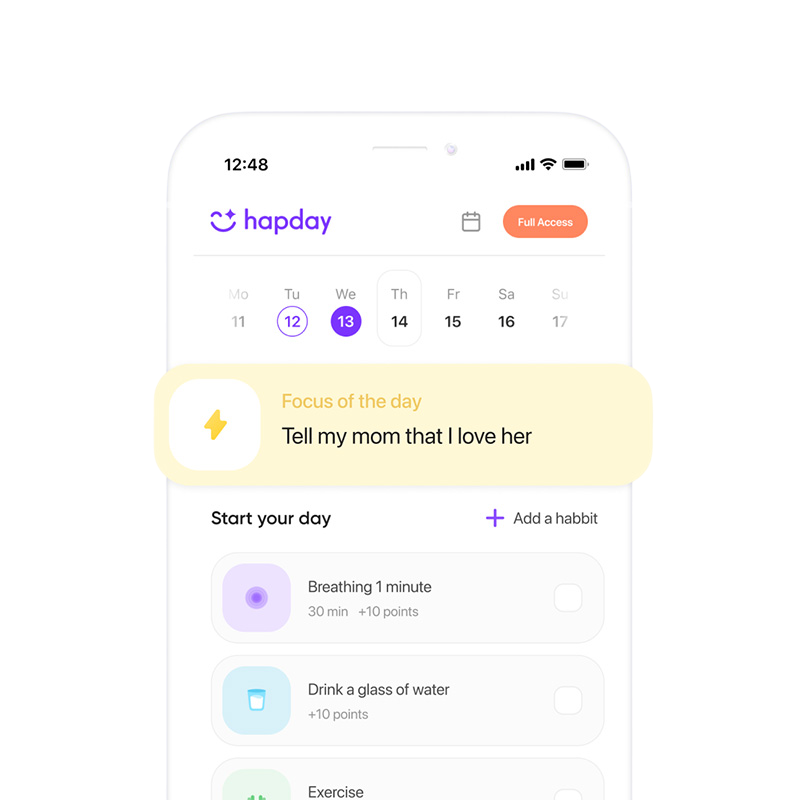
Try Sunrise – ADHD Coach for structure that sticks: habit tracking, focus timers, body-doubling, and AI-powered daily planning. Download: https://apps.apple.com/app/adhd-coach-planner-sunrise/id1542353302
The Bottom Line
Digital multitasking drains attention—especially with ADHD—but you can redesign the game. Build an environment that defaults to single‑tasking, work in short visual‑timer sprints, batch communication, redirect novelty with quick rewards, and protect sleep. When you slip, skip the shame and return to the task—that comeback is the muscle that rebuilds your focus and your confidence.
References
- American Psychological Association (APA) – Multitasking: Switching costs
- National Institute of Mental Health (NIMH) – Attention-Deficit/Hyperactivity Disorder
- Centers for Disease Control and Prevention (CDC) – Data and Statistics About ADHD
- Harvard Health Publishing – Blue light has a dark side
- Mayo Clinic – Mindfulness exercises
- NIH/NCBI – Sleep deprivation and cognitive performance
- World Health Organization (WHO) – Physical activity