





Introduction
You promise yourself this time will be different. A fresh to-do list, the good pens, a candle that smells like clarity. You sit down, heart thudding, determined to knock out everything you “should’ve already done.” Two hours later, the list has metastasized into 27 micro-tasks, your chest is tight, and somehow you’ve spent 40 minutes researching the best laundry detergent for hard water. If this sounds familiar, you’re not broken—you’re using a tool that wasn’t built for your brain. That’s the core of ADHD time management: the usual rules bend, and sometimes they snap.
When you live with ADHD, to-do lists often fail not because of laziness or lack of willpower, but because lists assume a brain that perceives time accurately, holds multiple steps in working memory, and finds delayed rewards motivating. ADHD scrambles those assumptions. Let’s unpack the science, the shame, and the simple design tweaks that make daily planning actually work for you.
Table of Contents
- Why your to-do list feels heavy before you even start
- 1) Time blindness is real
- 2) Working memory is over capacity
- 3) Motivation follows emotion, not willpower
- 4) Shame hijacks the system
- Rethink the tool, not yourself: designing for ADHD time management
- Principle 1: Turn time into something you can see
- Principle 2: Shrink the ask until it’s frictionless
- Principle 3: Let cues and contexts do the heavy lifting
- Principle 4: Make it social and accountable
- Principle 5: Protect energy, not just time
- A day redesigned: a mini case story
- Fixing the planning fallacy: stop guessing, start calibrating
- Turn lists into flows: a practical template
- What about apps? The right ones act like scaffolding
- Two quotes to keep in your pocket
- When your list keeps growing, zoom out, not in
- Evidence check: the science behind these shifts
- The Bottom Line
- About 60-second recap + next step
- References
Key Takeaways
- Traditional to-do lists fail ADHD brains because they hide time, steps, and emotions.
- Turn tasks into timeboxed calendar blocks and externalize tiny next steps.
- Use immediate cues, rewards, and social accountability to spark initiation.
- Protect energy with sleep, movement, and treatment—planning is easier with support.
- Design your system with compassion: smaller asks, visible wins, and buffers.
Why your to-do list feels heavy before you even start
“I wish people understood that ADHD isn’t a moral failing. It’s a neurodevelopmental condition with real differences in executive functioning—planning, time estimation, task initiation. If a tool ignores those differences, it’s not going to work. That’s not on you.”
— Dr. Sarah Chen, Clinical Psychologist, NYU
Four invisible forces tend to sabotage traditional lists:
1) Time blindness is real
Your list says, “Email Sam,” but your brain asks, “Is that five minutes or 50?” Research shows people with ADHD often experience altered time perception and timing accuracy, sometimes called “time blindness.” A 2013 meta-review cataloged timing deficits that affect estimating intervals and pacing. When time feels foggy, starting feels risky, so you delay. And because ADHD also leans toward favoring immediate rewards over delayed ones—“delay discounting”—future benefits struggle to compete with right-now friction. During remote work surges, many adults reported the clock losing its grip.
Why it matters: Estimating how long tasks will take is the foundation of every plan. If that estimation is off, plans collapse.
How to work with it:
- Replace “do email” with a visible time container, like “10-minute inbox triage at 2:00.”
- Timebox tasks on a calendar—so the time exists in sight, not just intention.
2) Working memory is over capacity
A to-do like “renew passport” is not one step. It hides a checklist: find old passport, take photos, fill forms, pay fee, mail it. ADHD brings executive function differences including working memory challenges. When your mind is already juggling five mental tabs—text your mom back, buy cat litter, reschedule dentist—“renew passport” becomes a freeze trigger.
Why it matters: If steps live only in your head, they compete for scarce cognitive space.
How to work with it:
- Externalize steps. Break “renew passport” into the smallest visible next step: “Find old passport—top drawer? 5 min.”
- Write the step where you’ll see it at the moment of action.
3) Motivation follows emotion, not willpower
“Motivation in ADHD is more cue-driven and interest-based. The dopamine system is less responsive to later rewards, so built-in novelty or accountability can make a massive difference.”
— Dr. Luis Ortega, Psychiatrist and ADHD Researcher, UCSF
Classic lists assume your brain will rally around delayed gratification. It often won’t—and it shouldn’t have to.
Why it matters: If tasks feel boring, ambiguous, or endless, your brain waves a red flag. Shame won’t move it.
How to work with it:
- Pair tasks with immediate, bite-sized rewards or novelty.
- Try sprints with a friend, a visible timer, or points for starting.
4) Shame hijacks the system
“I see so many clients whose planning fails not from poor strategies but from the emotional weight of accumulated ‘failures.’ We start by reducing shame and designing compassionate structures.”
— Amina Shah, ICF-Certified ADHD Coach
Why it matters: Stress sinks working memory and impulse control; it’s not just in your head—it’s in your neurochemistry.
How to work with it:
- Build systems that assume fluctuation and protect self-trust: smaller asks, visible wins, forgiving defaults.
Rethink the tool, not yourself: designing for ADHD time management
Traditional lists are like paper maps—useful, but easy to misread if you’re driving a different kind of vehicle. ADHD time management needs GPS: contextual, visual, responsive. You deserve a dashboard, not a sticky note that scolds you.
Principle 1: Turn time into something you can see
Why it works: Visualizing time externalizes an internal sense that’s often unreliable with ADHD, reducing anxiety and improving pacing.
How to try it:
- Timebox with labels: “Slides—30 min draft at 10:30.” Put it on a calendar, not a list.
- Use visual timers that show time shrinking.
- Bookend sessions: 2-minute setup at start, 2-minute shutdown notes at end.
Principle 2: Shrink the ask until it’s frictionless
Why it works: Lowering activation energy overcomes initiation barriers and delay discounting. Tiny wins create momentum.
How to try it:
- The 3-minute doors rule: open the doc, find the form, write one messy paragraph.
- Script your first keystrokes: “Open ‘Q3 Report’ and type 3 bullets under Findings.”
- Use Ready States: charge devices, lay out forms, pre-open tabs.
Principle 3: Let cues and contexts do the heavy lifting
Why it works: Habits thrive with clear cues in stable contexts. ADHD benefits from obvious, repeatable signals.
How to try it:
- If–then plans: “If it’s 2:00 and I’m at my desk, then I set a 15-minute timer and process the top five emails.”
- Place tasks where they happen: bills by your payment spot; gym bag on the doorknob.
Principle 4: Make it social and accountable
Why it works: Social presence boosts attention for many. Body doubling likely helps via co-regulation and shared structure.
How to try it:
- Co-work sessions: 50-minute video with a friend; state tiny goals; mute and work; 5-minute check-in.
- Micro-commitments: text a buddy a photo of your started task.
Principle 5: Protect energy, not just time
Why it works: ADHD performance swings with sleep, exercise, and medication. Skipping these is like ignoring fuel and tires.
How to try it:
- Anchor routines: consistent wake times stabilize attention.
- Move daily: short exercise bouts support executive function and mood.
- Consider treatment: behavioral strategies, coaching, and medication can help.
A day redesigned: a mini case story
When Maya, 28, went through her divorce, her task list exploded: legal documents, moving logistics, a high-stakes work project. Longer, stricter lists backfired. We rebuilt her days using ADHD time management principles:
- Turned “call attorney” into chained micro-steps with times: “Find case number—5 min at 9:30,” then “Draft 3 bullet questions—10 min at 9:40,” then “Call by 10:00 with notes open.” She finished in 25 minutes.
- Layered a co-working call at 2:00 with a 20-minute sprint timer for quick wins.
- Set an if–then rule: “If it’s 7:30, I lace up shoes and walk around the block.”
Her comment two weeks later: “It finally feels like the plan meets me where I am.” Less pressure, more physics.
Fixing the planning fallacy: stop guessing, start calibrating
The planning fallacy—our bias toward underestimating how long things will take—is universal, but it bites harder with ADHD. Your brain says, “I’ll write that email in five minutes,” ignoring the time to find the doc, reread the thread, and wrestle perfectionism.
Why it happens:
- We remember best-case scenarios.
- We ignore invisible steps and context switches.
- We discount future friction because it’s emotionless now.
How to calibrate:
- Track reality for a week: time “simple” tasks to build personal base rates.
- Add a friction multiplier: multiply fresh estimates by 1.5–2x; new environment, multiply again.
- Plan from done: imagine “hitting send,” work backward, put only Step 1 on today’s plan.
- Schedule buffers: leave 10–15 minutes between blocks for resets.
Turn lists into flows: a practical template
Morning compass (8 minutes)
- Look at your calendar, not your to-do list.
- Write three timeboxed blocks for your real constraints: “10:30–11:00 slides draft,” “1:30–1:50 billing,” “3:00–3:20 call prep.”
- Add one 3-minute door for each block (“open deck and outline 3 bullets”).
- Circle the one block that actually moves your week forward.
Work blocks (20–30 minutes)
- Start with the 3-minute door.
- Set a visual timer for the remaining minutes.
- Close with a 2-minute note: What’s the next tiny step? Where will you pick up?
Email and messages (twice a day, 15–20 minutes)
- Use a triage rule: delete, delegate, do now (under 2 minutes), or schedule it as a timebox later.
Energy anchors (three small cues)
- If it’s 12:30, stand and walk for 5 minutes.
- After a block, drink water and stretch.
- If stuck for 5 minutes, text a buddy: “Starting 10 on [task].”
What about apps? The right ones act like scaffolding
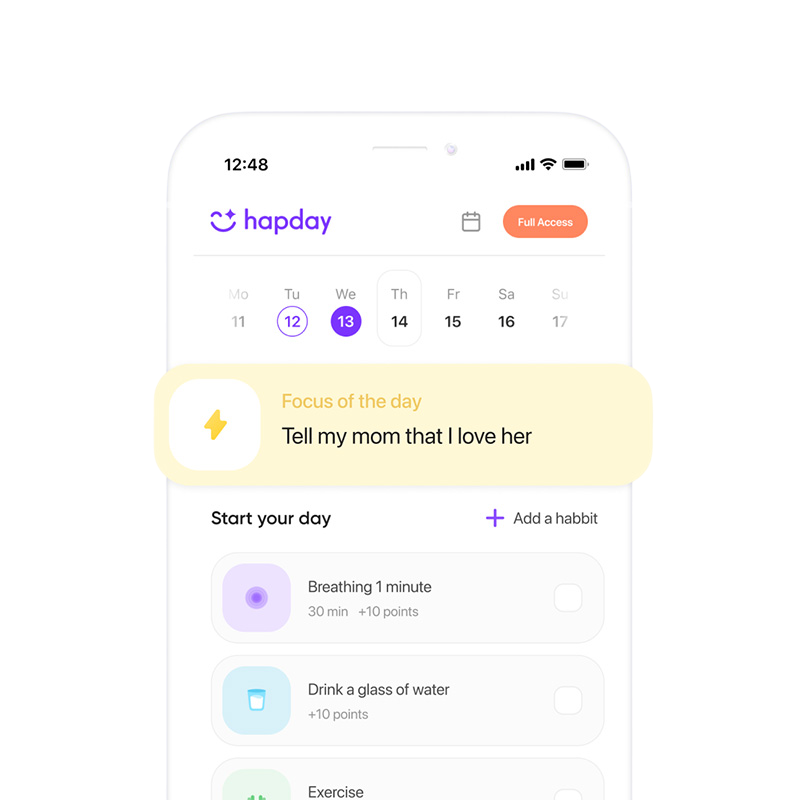
Apps can be allies if they turn time and steps into something you can see and feel. No app will save a broken plan—but the right one can hold the rails.
Look for:
- Visual timers and timeboxing on a calendar view
- Templates for if–then plans and routines
- Gentle accountability nudges and body-doubling options
- Quick capture that turns into next-action steps automatically
- Streaks or points for starting, not just finishing, to reward initiation
Two quotes to keep in your pocket
“ADHD planning works when we respect the physics of your brain. You can’t brute-force time perception or working memory. You can build rails for them.”
— Dr. Sarah Chen, Clinical Psychologist, NYU
“Think design, not discipline. Every friction you remove, every cue you add, is medicine for your day.”
— Dr. Luis Ortega, Psychiatrist and ADHD Researcher, UCSF
When your list keeps growing, zoom out, not in
You might be feeling the classic end-of-day spiral: a longer list than you started with, a headache, and a creeping belief that you’re bad at adulthood. Pause. Ask instead:
- Did I make time visible?
- Did I make steps small and specific?
- Did I protect my energy with sleep, movement, and meds if prescribed?
- Did I enlist context and community?
If not, your list didn’t fail because you didn’t try hard enough. It failed because it asked your brain to become a different brain for a day.
Evidence check: the science behind these shifts
- ADHD affects attention, impulse control, and executive functions like working memory and organization (NIMH). Adult ADHD is estimated at about 4.4% in the U.S. (Harvard Health).
- Time perception differences are well-documented in ADHD, affecting timing, estimation, and pacing (NIH/PMC meta-review).
- Delay discounting explains why delayed rewards don’t reliably start engines; immediate cues and rewards help (APA Dictionary).
- Implementation intentions—if–then plans—boost follow-through by linking a cue to a small action (APA Dictionary).
- Sleep and physical activity improve cognitive performance and mood (NINDS; Harvard Health).
- Evidence-based ADHD treatment includes behavioral strategies and, when appropriate, medication and therapy (NIMH).
The Bottom Line
You don’t need a harsher list. You need a kinder system that makes time visible, shrinks steps, bakes in emotion and reward, and assumes your day will have curves. ADHD time management isn’t about fixing you—it’s about fitting tools to your brain so planning becomes a runway, not a battleground.
About 60-second recap + next step
To-do lists often fail ADHD brains because they hide time, steps, and emotion. Design for your wiring: timebox with visual timers, shrink steps to 3-minute doors, use if–then plans, and protect energy with sleep, movement, and support. Build accountability and visible wins. Your brain isn’t the problem—the tool is.
Try Sunrise — ADHD Coach to turn these ideas into action with body-doubling sessions, habit tracking, focus timers, and AI daily planning built for ADHD time management. Download on the App Store.
References
- National Institute of Mental Health (NIMH) — ADHD
- Harvard Health Publishing — Adult ADHD
- NIH/PMC — Timing deficits in ADHD (meta-review)
- American Psychological Association (APA) Dictionary — Delay discounting
- American Psychological Association (APA) Dictionary — Planning fallacy
- American Psychological Association (APA) Dictionary — Implementation intention
- APA Monitor — The science of habit
- National Institute of Neurological Disorders and Stroke (NINDS) — Brain Basics: Understanding Sleep
- Harvard Health Publishing — Exercise and brain function